


Directing Intelligence Digest | October 29, 2026
Today’s video covers two stories. A privacy company is re-interviewing staff about how they actually use AI, and learning scientists mapped where AI helps students and where it gets in the way. Watch it asking what you could show for your own AI use this year.
The short version
Proton will re-interview staff on how they use AI, and the results feed a review that could change roles.
Statistics Canada finds youth hiring fell across AI-exposed and less-exposed jobs alike, and the slide started before ChatGPT.
Stanford’s TaskNet had workers describe their own jobs, and it found 79 tasks the government’s job database was missing.
A couple running a cave-house rental in Spain gave an AI agent their bookings, their plant care and, eventually, their press outreach.
A University of Minnesota panel of 30 experts says students should learn first, practice with AI, then think for themselves.
Soongsil University in South Korea set three levels of AI use, and the University of Iowa added Claude for Education to its toolkit.
WORK
Proton will re-interview staff on how they use AI
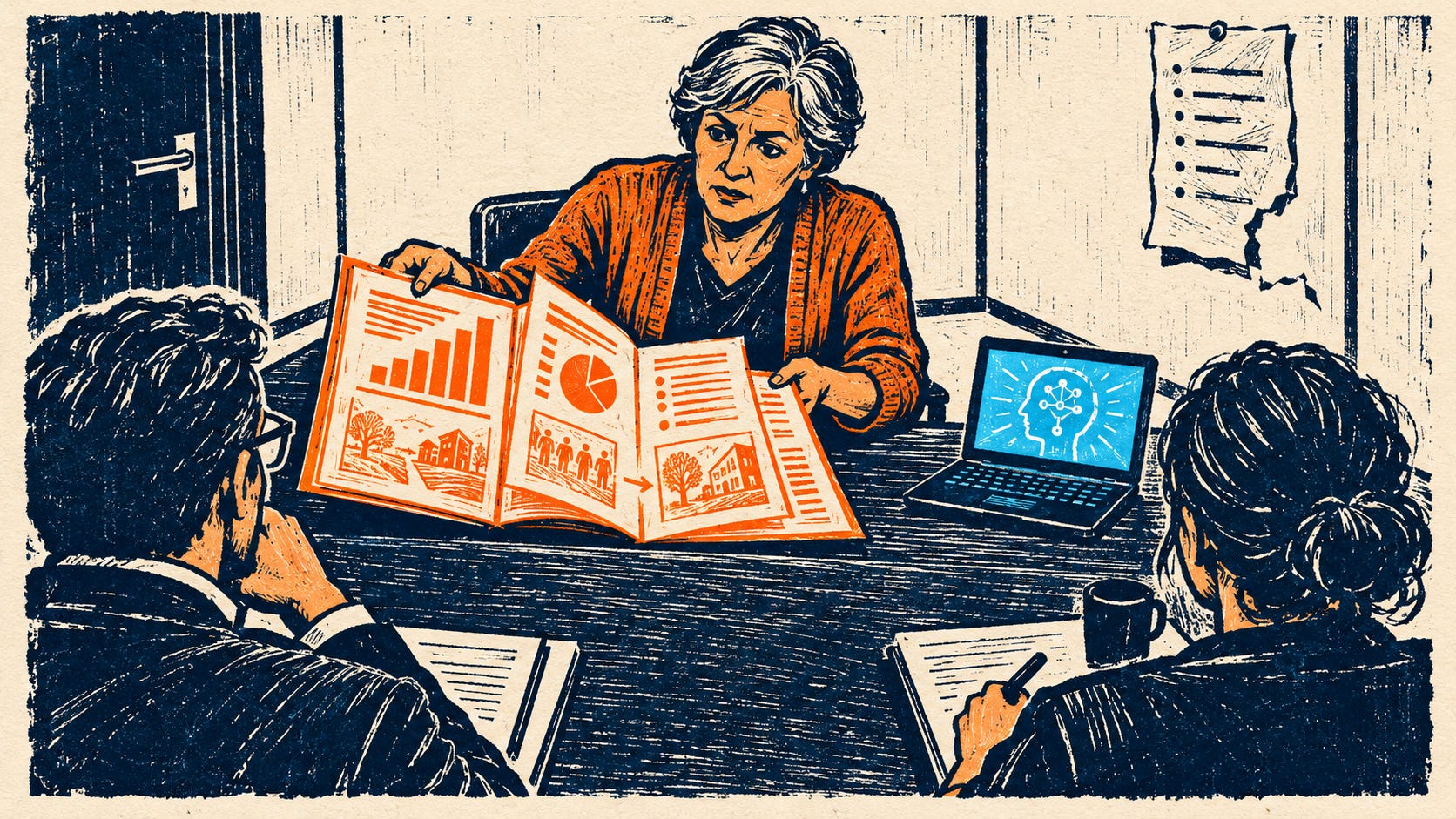
An internal email sent Monday, October 26, and leaked to 404 Media, tells Proton staff that re-interviews on AI use will run November 4 to 11. The email calls them “consequential,” and the findings feed a wider review that could change roles or whether people stay. Interviewers come from outside each person’s team, picked from leaders who “demonstrate strong AI capability.” Staff should bring what they changed, the results, and what didn’t work, since “a list of tools alone will not demonstrate this.” On Reddit, Proton said it is “not doing layoffs and using AI as an excuse,” that it is hiring, and that it will offer support.
[IMAGE: Top WORK story]
Who’s Directing? I like the question Proton is asking, and I’m uneasy about the stakes attached to it. If I ran this, I’d ask everyone to bring a before-and-after first and hold the job decisions until people had a season to learn.
Read it: Tom’s Guide on the Proton re-interviews
Canada’s young workers were losing hiring ground before ChatGPT
Statistics Canada researchers Tahsin Mehdi and Marc Frenette tracked hiring for workers aged 15 to 29 through August 2026. Between the six months to November 2022 and the six months to August 2026, youth hiring fell in jobs where AI is likely to help (2.9% to 2.5%), in jobs more open to substitution (3.2% to 3.0%), and in less-exposed jobs too (4.0% to 3.3%). Coding-heavy jobs fell the most, from 2.5% to 1.9%. The decline began before ChatGPT, and separations held steady. The agency finds no broad evidence yet that AI is cutting hiring in Canada.
What to watch: whether coding-heavy jobs keep pulling away from the rest.
Who’s Directing? This is the calm number I want leaders to read before they blame AI for a hiring freeze. Young people are struggling to get a first job, and that problem deserves its own fix whatever the cause turns out to be.
Read it: Statistics Canada study · The Daily summary
Stanford asked workers what they actually do all day
TaskNet, from Stanford’s Digital Economy Lab working with Mercor and ONET analysts, had 132 workers file 2,726 reports on their own work. ONET analysts accepted all 202 resulting task statements, against about 65% of usual worker write-ins. The new map adds 79 tasks. It covered 89% of what held-out workers reported, against 79% for O*NET, and it raises measured AI exposure for software developers and lawyers.
Who’s Directing? The people doing the job saw the change before the database did. I’d ask my own team the same question before I bought anyone’s exposure score.
Read it: TaskNet paper on SSRN · Stanford project page On X: Molly Kinder on TaskNet
A cave-house rental in Spain hired an AI agent without meaning to
VJ Roworth and Adrian Beadell moved from England to run Leonard’s Lookout, a four-bedroom holiday rental carved into a cave in Spain. They pay about 20 euros a month for ChatGPT, and their agent, which they call Scout, now replies to Airbnb bookings, cross-checks calendars across platforms and keeps a plant care schedule. It even found a Forbes contributor and drafted the pitch. “The only time it won’t automatically send anything is if it has an impact or a change on how we run things currently,” Roworth said. The details are the owners’ own account.
Who’s Directing? The rule I’d copy is the one about what the agent can’t send on its own. They decided where its judgment stops, and that’s what keeps it their business.
Read it: Forbes on Leonard’s Lookout and Scout
LEARNING
Thirty learning scientists agree: learn it first, then practice with AI
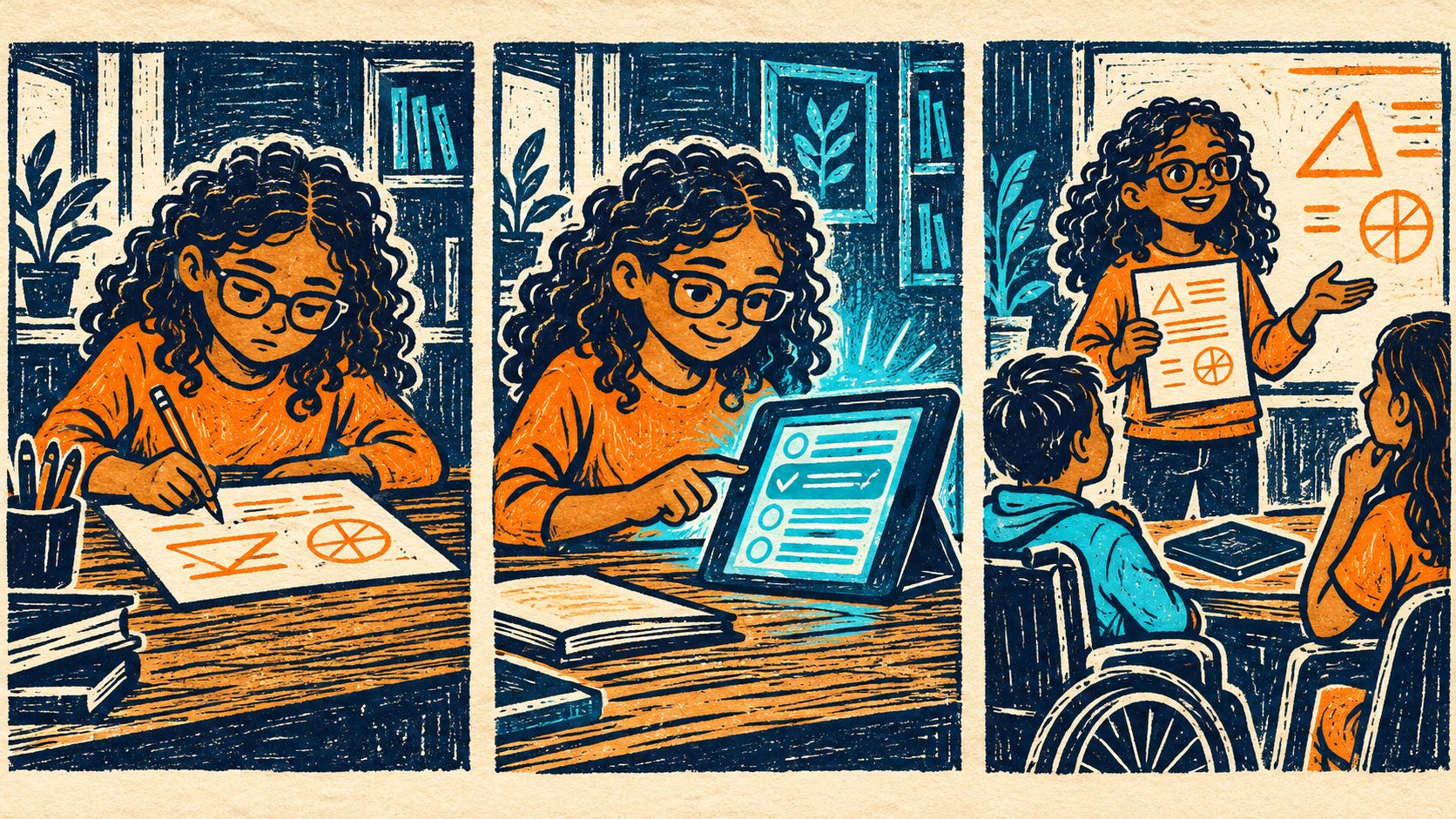
The University of Minnesota asked 30 learning scientists and education researchers to rate how generative AI could help or hurt 65 learning processes, and they reached consensus on 42. Their advice is to learn without AI first, use it to practice through quizzes, feedback and tutoring, and then do your own thinking when you apply what you know. They rated critical thinking, metacognition, writing and belonging as vulnerable, with little upside, and saw elementary students as most at risk. They rated the evidence on most processes as thin. “If I were a teacher, I would definitely not provide access to my students if my goal is for them to develop certain skills,” lead author Panayiota Kendeou told MPR News.
[IMAGE: Top LEARNING story]
Who’s Directing? This matches what I’ve seen in my own learning. The struggle at the start is where it sticks, and I’d rather my kids meet the AI as a practice partner after they’ve done that work themselves.
Read it: University of Minnesota consensus report · MPR News coverage
Soongsil University sets three levels of AI use
Soongsil University in Seoul has new AI guidelines with three levels: Level 0 bans AI on an assignment, Level 1 allows limited use, and Level 2 permits it. Instructors state the level in the syllabus, and misconduct can’t be decided by AI detection results alone. “These guidelines are not rules intended to prevent AI use, but common standards to help students develop their ability to ask questions and make judgments for themselves,” said Lim Jong-in, who chairs the AI committee.
Who’s Directing? A level printed on the syllabus tells students what the work is for before they start it. I’d want that clarity in every course my kids take.
Read it: Financial News on Soongsil’s guidelines
Iowa adds Claude for Education and asks what students will do with it
At the University of Iowa’s Faculty Senate on October 27, senior vice provost Barrett Thomas said students, faculty and staff now have an AI Gateway and Claude for Education, with university data staying inside the university. Copilot and ChatGPT Edu are also offered, and a HIPAA-ready Claude is planned for 2027. How AI is used in a course stays with faculty. “Nobody knows, not us, not OpenAI, not Anthropic, what these use cases really are,” Thomas said, so the university wants to gather the data. Some faculty raised concerns about critical thinking.
Who’s Directing? I respect a provost who admits nobody knows the use cases yet. I’d add one thing to the data plan, which is asking students what they stopped doing themselves.
Read it: The Daily Iowan on Iowa’s AI tools
Quick hits from X
Sridhar Vembu on rebalancing. The Zoho founder says one smart person with AI can now do the work of ten, and he expects a painful rebalancing as industries that couldn’t afford engineers or marketers start hiring them. Read the post
Kevin Bryan on doing new things. Bryan argues AI pays off most when work gets redesigned, using a design tool that makes hundreds of variations free as his example. Read the thread
Keith Humphreys on a no-tech class. Humphreys says his Stanford guest lecture took 50% longer than last year because a no-tech rule brought far more student questions. Read the post
Who’s Directing? Humphreys lost time and gained questions, and I’d take that trade in any classroom. Saved time only matters if we spend it on something people can’t get from the tool.
Worth a listen
The a16z Show: Mark Cuban on Why AI Could Turn Solo Founders Into Trillionaires (October 28). About halfway through, Cuban says the biggest struggle for most organizations is not knowing how to put AI to work. “There will be the trillionaire in the basement,” he says. Watch the episode
That’s the Digest for Thursday. Write down one thing AI changed in your work this month, and what didn’t work, before anyone asks.
Todd
Sources
Tom’s Guide, Aleksandar Stevanović, “Proton to re-interview staff on AI use, and jobs may be on the line,” Oct 27, 2026 (reporting a leaked email first published by 404 Media): article
Statistics Canada, Tahsin Mehdi and Marc Frenette, “Hiring and job separation rates in the era of generative artificial intelligence: Early evidence,” Oct 28, 2026: study · The Daily
Wang, Haupt, Robinson, Lewis, Brynjolfsson and Yang, “TaskNet,” SSRN, Oct 26, 2026: paper · Stanford Digital Economy Lab
Forbes, Christine Haughney Dare-Bryan (contributor), “What Happens When Founders Embrace A Full Time AI Publicist,” Oct 26, 2026: article
Kendeou, Greene, Nixon and colleagues, “Ways generative AI can support and threaten learning in K-20 US education,” University of Minnesota CEHD, Oct 2026: report
MPR News, Elizabeth Shockman, Oct 28, 2026: article
Financial News (Korea), Soongsil University AI guidelines, Oct 27, 2026: article
The Daily Iowan, Oct 27, 2026: article
The a16z Show, Mark Cuban episode, Oct 28, 2026: episode